


All-Suture Anchors: 5 Essential Questions Before Ordering
All-suture anchors are soft tissue fixation devices with a flexible anchoring component rather than a conventional rigid anchor body. For hospitals, orthopedic clinicians and medical distributors in Pakistan, ordering the correct system requires more than selecting a size. The product reference, intended application, supplied sutures, preparation instruments and documentation all need to match the clinical requirement.
This guide explains what to confirm before purchasing and introduces the Sensitiva options listed by NST Implants.
What Are All-Suture Anchors?
An all-suture anchor uses a textile or suture-based component to provide fixation in bone for a soft tissue repair. Its exact construction and deployment requirements depend on the device.
Suture-anchor fixation is used in selected orthopedic repairs. The AAOS overview of shoulder arthroscopy explains that surgeons may use devices to anchor sutures into bone during some procedures. This general explanation does not establish the indications of a particular anchor.
All-suture anchors should therefore be assessed using their own technical information and instructions for use. A category name cannot confirm which procedure, anatomy or repair configuration is appropriate.
All-Suture and Knotless Describe Different Features
“All-suture” describes the anchoring component. “Knotless” describes how a particular system secures its sutures. Do not assume that every soft anchor is knotless.
Similarly, “all-inside” meniscal repair is a different device or technique category. It should not be used as another name for an all-suture bone anchor.
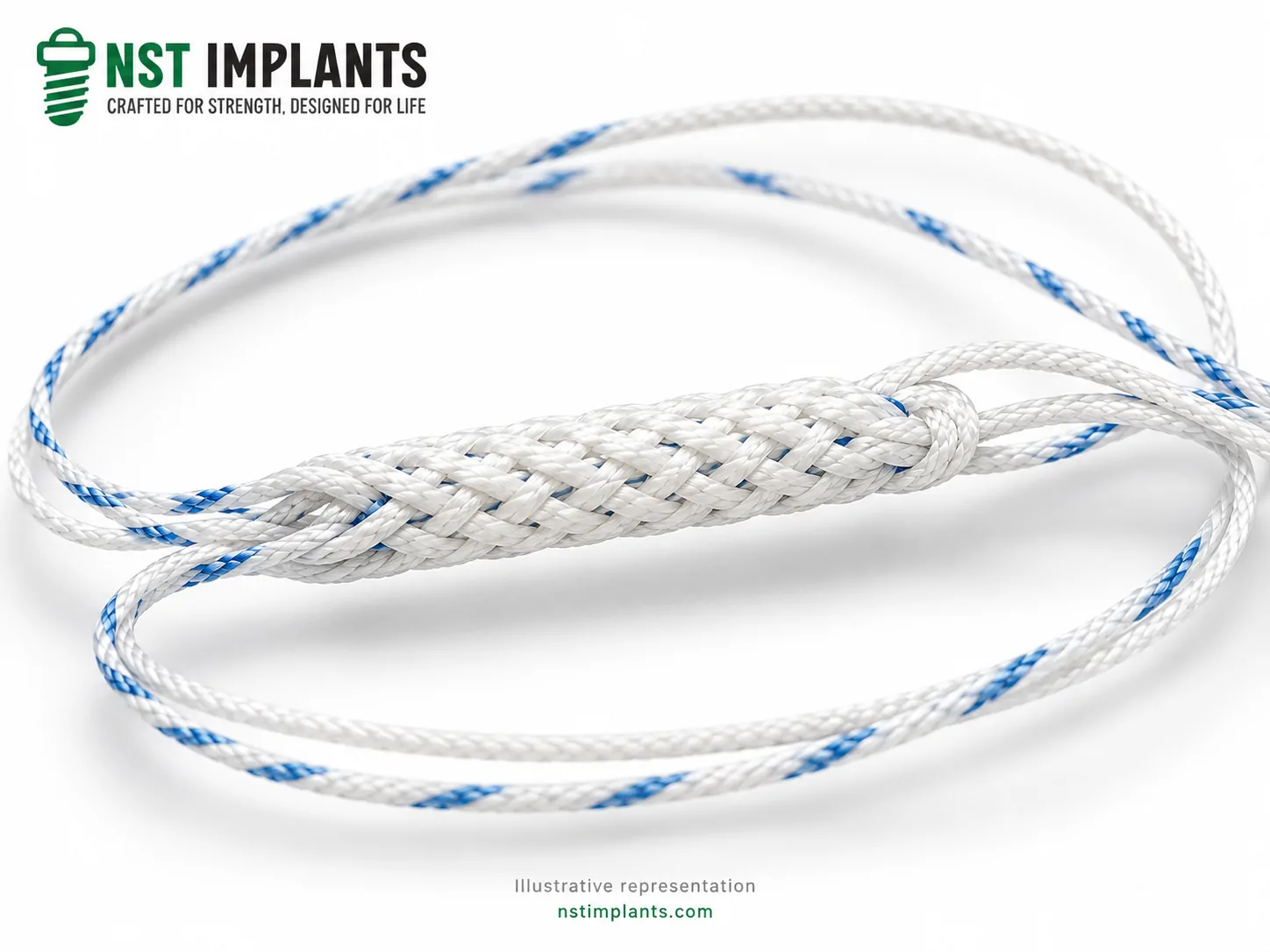
Sensitiva All-Suture Anchors Listed by NST Implants
NST’s product pages identify UHMWPE, or ultra-high-molecular-weight polyethylene, as the material for the Sensitiva soft anchor products. The pages list the following options:
| Product listing | Listed size | Reference | Application described on the product page |
|---|---|---|---|
| Sensitiva Soft Anchor All Suture | 2.0 mm | 778510020 | Shoulder surgery |
| Sensitiva Soft Anchor All Suture | 3.0 mm | 778510030 | Shoulder surgery |
| Sensitiva Soft Anchor All Suture Mini | 1.0 mm | 778510010 | Hand and foot surgery |
Explore the Sensitiva Soft Anchor All Suture and Sensitiva Soft Anchor All Suture Mini listings for the displayed product information.
These size labels should not be interpreted as preparation-hole dimensions without checking the technical sheet. The listed application also does not replace a complete statement of indications, contraindications and warnings.
1. Which Reference and Size Have Been Specified?
Start with the clinician’s requested device and configuration, then confirm the matching catalogue reference.
For example, the listed 2.0 mm and 3.0 mm Sensitiva options have different references. A purchasing request stating only “Sensitiva anchor” leaves the intended option unclear.
Ask for confirmation of:
- Exact product name and reference
- Listed size and relevant preparation dimensions
- Suture configuration and contents of the supplied package
- Required quantity
- Any accessories ordered separately
The Mini designation is also insufficient on its own. NST lists the 1.0 mm Mini under hand and foot surgery, while the other page describes shoulder applications. Do not substitute one option for another solely because it is smaller.
2. Does the Device Documentation Match the Planned Use?
Request the current instructions for use and technical sheet before finalizing an order for all-suture anchors.
The clinical team should review the stated indications, contraindications, limitations and handling requirements against the proposed procedure. Procurement staff should confirm that the quotation identifies the same reference that was reviewed.
Useful questions include:
- What applications are explicitly documented for this model?
- What preparation and deployment requirements are stated?
- Which warnings or restrictions apply?
- Does the supplied documentation match the exact reference?
Keep clinical selection separate from commercial availability. Having an item in stock does not establish its suitability for a particular patient or repair.
3. Are the Required Instruments and Sutures Included?
A compatible instrument system is an important part of the purchase. Ask whether the package includes the required inserter and whether separate preparation tools are needed.
Confirm the relevant drill, guide or other instruments using device documentation. Do not assume compatibility with another anchor system, even where products have similar names or dimensions.
Also ask about the supplied sutures, including their configuration and any product-specific handling requirements. Those details may influence whether the quoted system matches the clinician’s request.
If a hospital intends to use existing instruments, identify their references and obtain documented compatibility confirmation. Including this information early helps avoid an incomplete quotation.
4. What Evidence and Limitations Apply to the Anchor?
Evaluate evidence for the specific device rather than assuming that all-suture anchors have identical mechanical performance.
A primary biomechanical study examining all-suture anchor pullout found an association between local cortical thickness and pullout strength for the tested design in human humeri. The finding highlights a consideration in that experimental setting. It is not an NST-specific performance result or a universal clinical selection threshold.
Laboratory load testing also does not directly establish healing, rehabilitation progress or return-to-sport timing. Request relevant product-specific evidence where needed and let the clinical team interpret its applicability.
Avoid choosing a device solely because it is described as small, soft or metal-free. These characteristics do not demonstrate superiority for every procedure.
5. Are Packaging, Traceability and Delivery Details Confirmed?
Before accepting the order, confirm the supplied product’s sterility status, expiry date where applicable, storage requirements and packaging information.
Request traceability details, including product reference and lot or batch identification. Ask for the documentation applicable to the exact device and its supply in Pakistan.
Commercial confirmation should cover:
- Stock for the requested reference and quantity
- Delivery city and expected lead time
- Quotation validity and included components
- Additional instrument or accessory costs
- Process for resolving an incorrect or damaged delivery
A catalogue listing does not confirm immediate availability. Obtain written confirmation before coordinating the purchase with clinical scheduling.
A Clear Inquiry Checklist
| Include in your inquiry | Why it matters |
|---|---|
| Product name, reference and requested size | Identifies the exact option |
| Required quantity and delivery city | Supports a relevant availability check |
| Clinician-specified configuration | Connects the quote to the clinical requirement |
| Existing instrument references | Allows compatibility questions to be addressed |
| Technical sheets and instructions requested | Supports review before ordering |
| Packaging, documentation and delivery questions | Clarifies the complete purchasing requirement |
Frequently Asked Questions
What material does NST list for Sensitiva all-suture anchors?
NST’s Sensitiva product pages identify UHMWPE as the material. Request the current technical sheet to confirm the complete device and supplied suture specifications.
Which Sensitiva sizes are listed?
The standard product page lists 2.0 mm and 3.0 mm options. The Mini page lists a 1.0 mm option. Confirm the exact reference and availability before ordering.
Can the Mini replace a standard anchor?
Do not assume interchangeability. The pages describe different application areas, and the clinical team should assess the exact device against its instructions for use.
Are all-suture anchors always knotless?
No. The terms describe different features. Confirm the suture-securing mechanism for the selected model.
How can a hospital request a quotation?
Provide the product reference, requested configuration, quantity and delivery city. Ask for technical documentation, compatible instruments and current delivery terms.
NST Implants’ Distribution and Import Licensing
NST Implants holds a Form 11 license for the sale of drugs as a distributor and a DRAP Form 4 license for the import of medical devices. Hospitals and distributors can request copies of the relevant licenses when reviewing supplier documentation.
These business licenses should be reviewed separately from the documentation applicable to each implant. They do not, by themselves, establish approval, registration or clinical performance of every all-suture anchor. For the selected reference, request the relevant device documentation alongside technical information and instructions for use.
Request All-Suture Anchor Information from NST Implants
A complete order starts with a clear device specification. Confirm the reference, documented intended use, supporting instruments and delivery details together.
Browse NST’s sports medicine range or contact NST Implants to request technical information and a quotation for the listed Sensitiva options.
Email: info@nstimplants.com
Phone: +92 300 970 9100
Website: nstimplants.com