


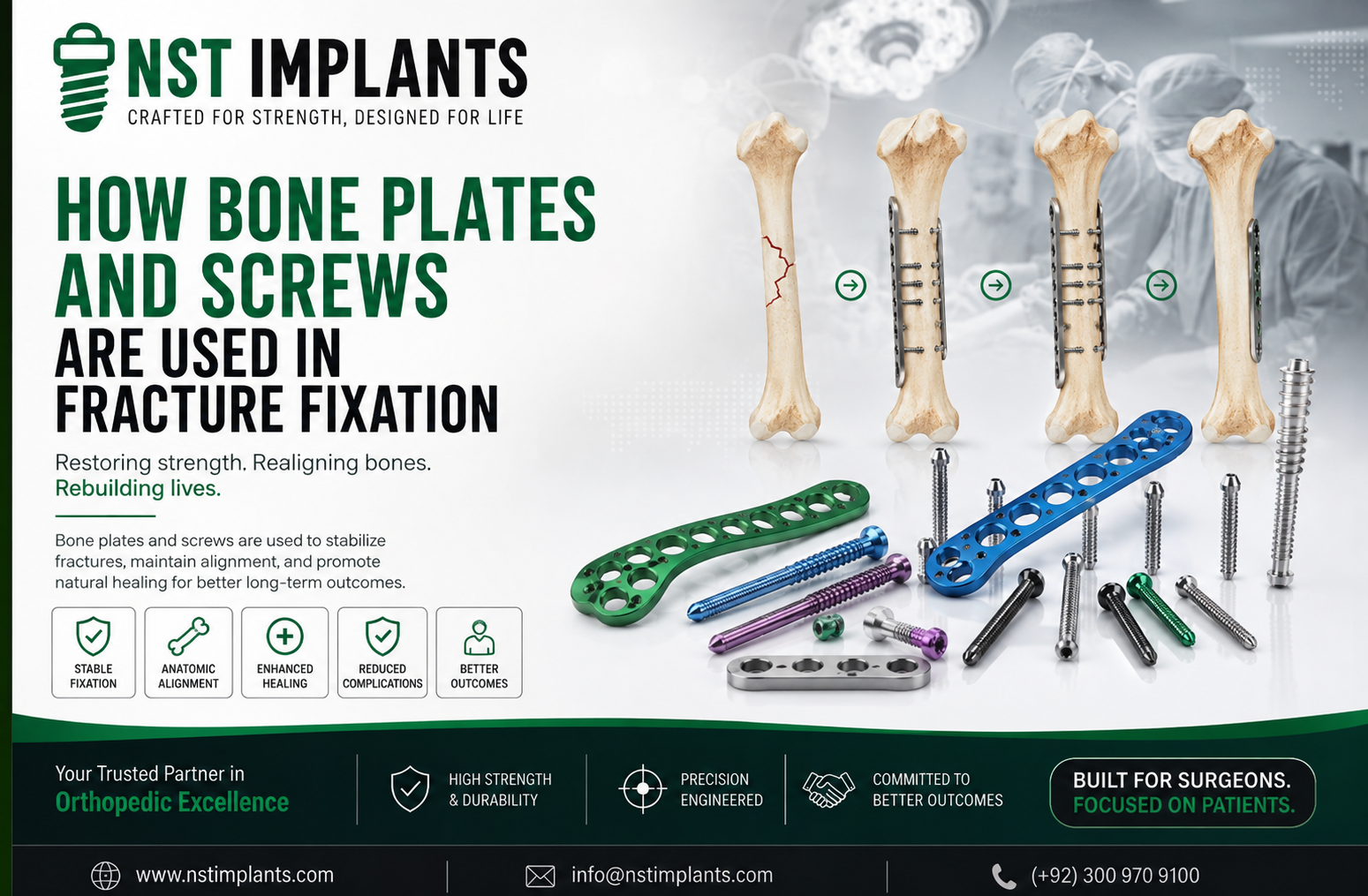
Fractures can occur when a bone is subjected to more force than it can withstand. Depending on the location and severity of the injury, a fracture may require more than immobilization with a cast or brace. In many cases, surgeons use internal fixation techniques to stabilize the broken bone and support proper healing. Among the most commonly used orthopedic fixation devices are bone plates and screws.
These implants help hold fractured bone fragments in the correct position while the natural healing process takes place. Their design, placement, and use depend on factors such as the type of fracture, the affected bone, bone quality, and the patient’s overall condition.
What Are Bone Plates and Screws?
Bone plates are orthopedic implants designed to stabilize fractured bones. They are generally manufactured from biocompatible materials such as stainless steel or titanium alloys. Plates come in different shapes, sizes, thicknesses, and configurations to accommodate different bones and fracture patterns.
Screws are used to secure the plate to the bone or, in some fixation techniques, to directly stabilize bone fragments. Different screw designs serve different purposes. For example, some screws are designed to compress bone fragments together, while locking screws can connect securely with specially designed holes in a plate.
Together, bone plates and screws can create a stable fixation construct that helps maintain alignment during the healing process.
When Are Bone Plates and Screws Used?
Not every fracture requires surgical fixation. Simple fractures may heal effectively with casting, bracing, or other conservative treatments. However, surgical fixation may be considered when a fracture is displaced, unstable, involves a joint, or cannot be maintained in proper alignment through nonsurgical treatment.
Common situations in which internal fixation may be used include:
- Displaced fractures
- Complex or multiple fracture patterns
- Fractures involving a joint surface
- Unstable fractures
- Certain open fractures
- Fractures that fail to heal properly
- Fractures where maintaining anatomical alignment is important
The decision to use a plate and screw system is made by an orthopedic surgeon after evaluating imaging studies and the patient’s individual circumstances.
How Bone Plates and Screws Stabilize a Fracture
The primary purpose of fracture fixation is to restore and maintain appropriate bone alignment. During surgery, the fractured bone fragments are carefully repositioned, a process commonly known as fracture reduction.
Once the fragments are appropriately aligned, the surgeon selects a suitable plate based on the anatomy and fracture pattern. The plate is positioned along the bone and secured with screws.
Depending on the fixation system and surgical technique, the construct can provide compression, stability, or support to the fractured area.
Compression Fixation
Some plate and screw configurations are designed to bring bone fragments together. Compression can help create close contact between fracture surfaces and provide mechanical stability.
Locking Fixation
Locking plates use specially designed screw holes that allow screws to lock into the plate. This creates a fixed angle between the screw and plate.
Locking constructs can be particularly useful when bone quality is reduced or when conventional screw fixation may not provide sufficient stability.
Bridge Plating
In certain complex fractures, the plate may function as a bridge across the fractured area. Instead of compressing every fracture fragment, the technique can help maintain overall alignment while allowing the fracture zone to heal.
The specific fixation strategy depends on the fracture and the surgeon’s treatment plan.
Types of Bone Plates
Orthopedic manufacturers produce plates designed for different anatomical locations and fracture patterns. Common examples include:
Compression Plates
Compression plates are designed to facilitate compression between selected bone fragments. They may be used when direct compression is desirable for fracture stability.
Locking Plates
Locking plates feature threaded or specially designed holes that allow compatible screws to lock into the plate. They can provide angular stability and are available for many areas of the skeleton.
Reconstruction Plates
These plates can be contoured to match certain anatomical structures. Their flexibility in shaping can be useful in areas with complex bone geometry.
Anatomical Plates
Anatomical plates are designed to correspond closely to the shape of specific bones or regions. Examples include plates intended for the clavicle, distal radius, humerus, femur, tibia, and other anatomical areas.
Types of Screws Used in Fracture Fixation
Screws are available in multiple designs, each serving a particular fixation purpose.
Cortical Screws
Cortical screws are commonly designed for use in dense cortical bone. Their thread pattern is suited to the characteristics of cortical bone.
Cancellous Screws
Cancellous screws are designed for areas containing more porous cancellous bone. They generally have a thread design appropriate for this type of bone.
Locking Screws
Locking screws are designed to engage with compatible locking plate holes. Once secured, they can create a stable connection between the screw and plate.
Cannulated Screws
Cannulated screws contain a hollow central channel. This design can allow placement over a guidewire, which can assist with accurate positioning during certain surgical procedures.
The Fracture Fixation Procedure
The exact surgical procedure varies according to the injury. In general, fracture fixation with bone plates and screws involves several stages.
First, the patient is prepared for surgery and appropriate imaging is reviewed. The surgeon then accesses the fractured bone through a carefully planned surgical approach.
The fractured fragments are repositioned into an appropriate alignment. Once reduction is achieved, the selected plate is positioned over the bone.
The surgeon then places screws through the plate and into the bone. The number, type, and placement of screws depend on the fracture pattern, bone quality, plate design, and fixation strategy.
Imaging may be used during surgery to verify alignment and implant positioning. Once satisfactory fixation is confirmed, the surgical site is closed and the patient enters the postoperative recovery period.
Benefits of Bone Plates and Screws
Internal fixation can provide several potential benefits when appropriately indicated.
Maintaining alignment: Plates and screws can help maintain the position of fractured bone fragments.
Mechanical stability: Proper fixation can provide stability that supports the biological healing process.
Early movement: Depending on the fracture and surgeon’s recommendations, stable fixation may allow earlier controlled movement of nearby joints.
Joint restoration: For fractures involving joint surfaces, accurate reduction and stable fixation may help restore anatomical relationships.
Versatile applications: Different plate and screw designs allow orthopedic surgeons to address a wide range of fracture patterns and anatomical locations.
Factors That Influence Implant Selection
Choosing the appropriate fixation system requires consideration of several factors. These may include the location and type of fracture, the number of fragments, bone quality, soft tissue condition, patient age, activity level, and other medical considerations.
The surgeon also considers whether compression, angular stability, bridging, or another fixation strategy is appropriate.
Implant size and geometry are equally important. A plate must be suitable for the anatomy, while screws must be compatible with the selected plate and appropriate for the bone.
Recovery After Fracture Fixation
Recovery varies significantly depending on the fracture and the patient’s overall health. After surgery, patients may receive instructions regarding wound care, pain management, physical therapy, and weight-bearing or activity restrictions.
Follow-up imaging is commonly performed to evaluate bone alignment and monitor healing. Rehabilitation may gradually increase movement and strength as the fracture progresses through the healing process.
Patients should follow their orthopedic team’s instructions carefully because returning to strenuous activity too quickly can place unnecessary stress on the healing bone and fixation construct.
Potential Risks and Complications
Although fracture fixation can be highly effective, surgery and implanted devices carry potential risks. These may include infection, bleeding, nerve or blood vessel injury, implant irritation, loss of alignment, delayed healing, nonunion, or hardware-related problems.
In some cases, additional surgery may be necessary. The risk of complications depends on factors such as the type of fracture, surgical technique, patient health, and postoperative care.
Conclusion
Bone plates and screws play an important role in modern fracture fixation. By stabilizing fractured bone fragments, these orthopedic implants can help surgeons restore alignment and provide mechanical support during the healing process.
Different plate and screw designs are available for different bones and fracture patterns, including compression plates, locking plates, reconstruction plates, cortical screws, cancellous screws, and cannulated screws.
The appropriate fixation method depends on the individual injury and should be determined by a qualified orthopedic professional. Advances in implant design and surgical techniques continue to improve the options available for managing complex fractures and supporting successful bone healing.